GPSDO vs Rubidium Frequency Standard: Which Should You Choose?
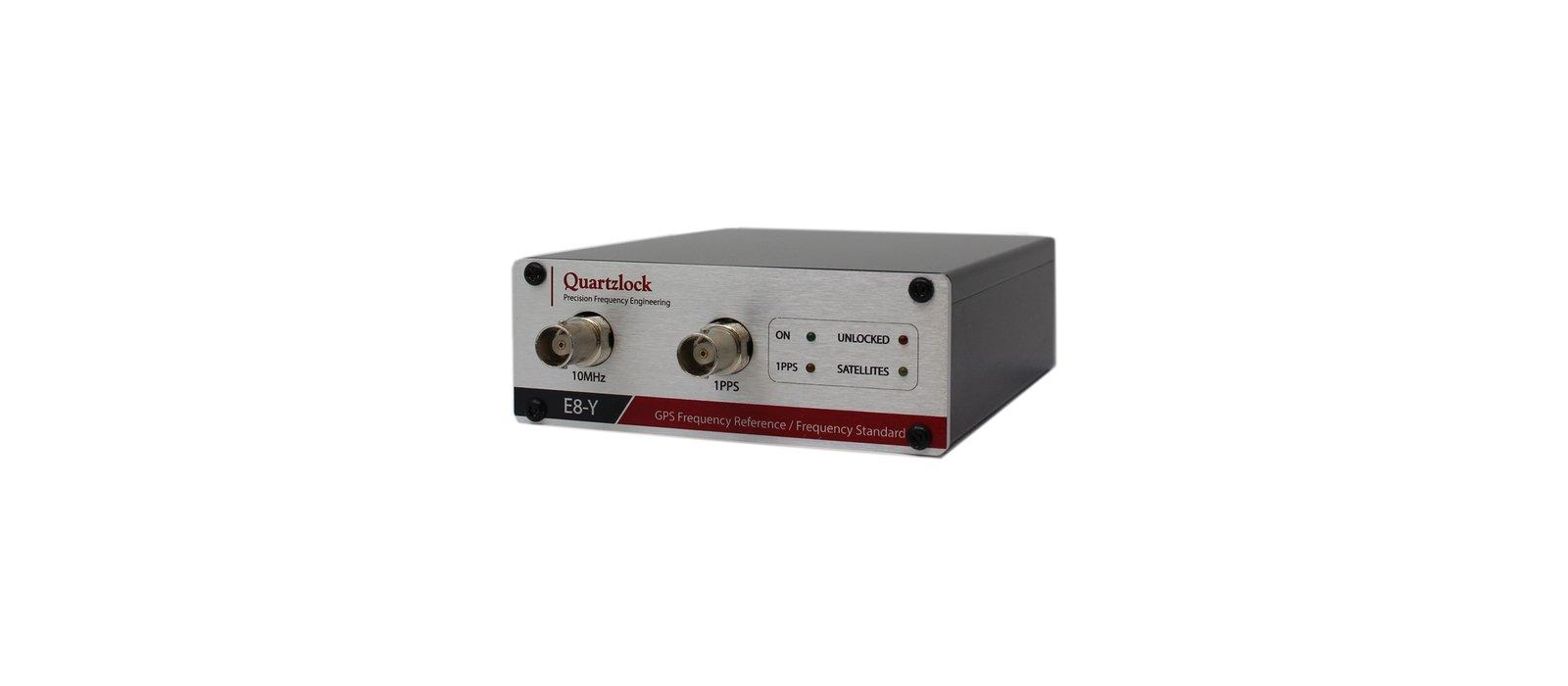
A GPS disciplined oscillator (GPSDO) and a rubidium frequency standard can both supply a 10 MHz and 1PPS reference. They get there in different ways, and the right choice depends on whether you can rely on a satellite signal.
How a GPSDO works
A GPSDO steers an oven controlled crystal oscillator (OCXO) against the signal from GPS and other GNSS satellites. While the signal is available, the output follows GNSS time very closely. See our guide What is a GPSDO? for the basics.
How a rubidium frequency standard works
A rubidium frequency standard uses an atomic transition in rubidium vapour to stabilise its output. It has very low ageing and does not depend on any external signal. Read more about rubidium frequency standards.
Holdover: the key difference
If the GNSS signal is lost, a GPSDO falls back on its OCXO, which drifts faster over time. A rubidium standard keeps its accuracy for much longer. What is holdover?
Quick comparison
- Long-term accuracy with GNSS: GPSDO and GPS disciplined rubidium are both traceable to GNSS time.
- Holdover without GNSS: rubidium is clearly better.
- Phase noise: a good OCXO often matches or beats rubidium at short offsets.
- Cost and size: a GPSDO is usually the more economical choice.
The best of both: GPS disciplined rubidium
If you need GNSS traceability and long holdover, a GPS disciplined rubidium reference combines both. For cost-effective GNSS timing, see GPS disciplined OCXO products.
Need help choosing?
Vikronix supplies GPSDOs and rubidium standards from Quartzlock and RFX Group to engineering teams in Sweden, Norway, Denmark and Finland. Tell us your requirements and we will recommend a model. Compare also rubidium vs OCXO.
Vikronix Editorial Team
Technical perspectives from specialists in precision frequency control, timing, quartz resonators, and oscillator technology.
Relaterte produkter for frekvenskontroll
Related products unavailable
Related products are shown on product-specific pages.
Continue reading